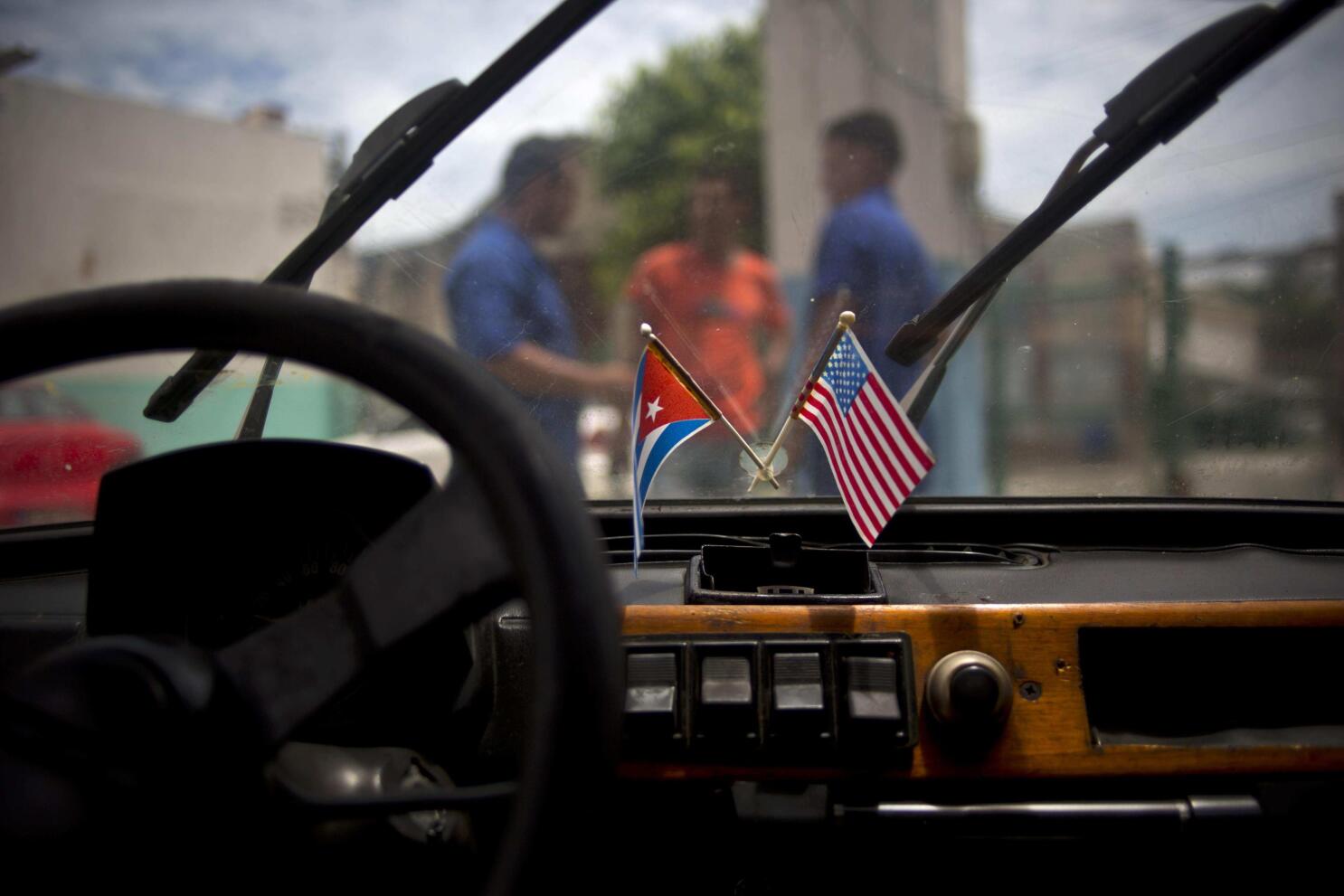
The U.S. embargo on Cuba, often called el bloqueo (the blockade), is a set of economic, financial, and travel restrictions that the U.S. has imposed on the island since 1960. The goal of the embargo was originally to pressure Cuba into political reform and weaken the government that came into power after the 1959 revolution. For over 60 years, the embargo has restricted trade, investment, and financial dealings between Cuba and much of the world—not just the U.S.
But here’s the truth: the embargo has not helped the Cuban people secure a better future. Instead, it has caused severe hardship for ordinary Cubans. Many Cuban Americans who have grown up hearing different perspectives about Cuba may have mixed feelings about the embargo. It’s often framed as something that punishes the government while protecting the Cuban people. But the reality on the ground tells a very different story.
Cuba’s Designation on the State Sponsors of Terrorism List
In 2021, Cuba was put back on the U.S. government’s State Sponsors of Terrorism (SSOT) list—a label that further isolates the country from the global financial system. Even former U.S. intelligence officials have admitted that this label is misleading and politically motivated. The SST designation is just one more layer in the web of U.S. sanctions that cuts off Cuba from international trade, discourages foreign investment, and amplifies the already damaging effects of the embargo.
This label, combined with the embargo, makes it almost impossible for Cuba to access the international financial system, making daily life more difficult for Cubans, not the government. Many businesses and banks worldwide refuse to work with Cuba out of fear of U.S. penalties. The result is that Cubans struggle to import basic goods like food, medicine, and hygiene products—things that most of us take for granted.
The Human and Economic Toll of the Embargo
Cuba today is in the middle of one of the worst economic crises in its history. You might have heard of the “Special Period” in the 1990s, when Cuba lost support from the Soviet Union, and the economy collapsed. Today, the situation is just as bad, if not worse. But this time, the embargo plays a much larger role in deepening the crisis.
In recent years, the Trump administration tightened restrictions on Cuba, including limits on remittances—money sent from Cuban Americans to help their families on the island. The blacklisting of Cuban financial institutions like FINCIMEX has made it nearly impossible for families to send financial help to loved ones. This has devastated many Cuban families who depend on remittances to survive. For those in Cuba, basic goods are out of reach due to sky-high inflation and shortages caused by the U.S. sanctions.
Isn’t Cuba’s Government Also to Blame?
It’s true that the Cuban government is not blameless in Cuba’s economic struggles. Many Cubans are frustrated with bureaucracy, inefficient agricultural policies, and government mismanagement. There have even been protests calling for more accountability. But focusing only on Cuba’s internal issues ignores the biggest factor in the economic suffering of the Cuban people: the U.S. embargo.
It’s easy to blame Cuba’s government for the conditions on the island, but we can’t overlook how much damage the U.S. embargo has done. Imagine trying to run an economy when you’re blocked from trading with most of the world, unable to access financial institutions, and restricted from importing essential goods. This isn’t just about politics; it’s about basic survival for millions of Cubans.
Why Ending the Embargo Matters for Cuban Americans
If you’re a Cuban American, you may have mixed feelings about the embargo. You might feel that keeping pressure on the Cuban government is necessary, or that lifting it might somehow support the government. But here’s why you should reconsider:
- It’s the Cuban People Who Suffer Most: The embargo doesn’t punish the Cuban government—it punishes ordinary people. It blocks access to food, medicine, and basic goods, making daily life a struggle for Cubans. Lifting the embargo would directly help the people who need it most.
- Restoring Family Connections: Many Cuban Americans have struggled with restrictions on visiting family in Cuba or sending them remittances. The embargo, particularly under recent policies, has made it harder for Cuban families to stay connected. Ending it would allow for easier travel, financial support, and connection with our roots.
- Empowering the Cuban People: Ending the embargo doesn’t mean endorsing Cuba’s government. It means giving the Cuban people the resources they need to improve their lives. More trade, investment, and opportunities for entrepreneurship would help Cubans build a better future, independent of government control.
- A Better Path Forward: The future of Cuba should be up to the Cuban people, free from the economic restrictions and hardships imposed by external policies. The embargo hasn’t worked in over 60 years. Instead of isolating Cuba, it has pushed the country closer to nations like Russia and China and caused immense suffering. A better path forward involves engagement, dialogue, and supporting the Cuban people in ways that empower them to shape their own future.
Public Support for Lifting the Embargo
If you feel conflicted about lifting the embargo, you’re not alone. But it’s important to know that the majority of Americans—across political lines—now support ending the embargo and normalizing relations with Cuba.
- A Pew Research Center poll found that 72% of Americans favor ending the trade embargo, including 59% of Republicans (WOLA, Pew Research Center)
- An Atlantic Council poll showed that 58% of heartland voters in traditionally Republican states support lifting the embargo (Atlantic Council)
- Even among Cuban Americans, opinions are shifting. In a 2022 Florida International University (FIU) poll, 52% of Cuban Americans in Miami-Dade County said they support lifting the embargo (Americas Quarterly)
This growing consensus reflects a recognition that the embargo is outdated and counterproductive. It harms the Cuban people, isolates the U.S. on the world stage, and has failed to achieve its goals. Ending the embargo isn’t just a humanitarian issue—it’s also a reflection of the evolving views of the American public.
Why Now?
Cuba is at a breaking point. The island’s economy has shrunk, inflation is out of control, and shortages are everywhere. More than 400,000 Cubans—almost 4% of the population—have left the island in recent years, trying to escape the harsh conditions. Now is the time for Cuban Americans to stand up and say, “Enough is enough.” We can disagree with the Cuban government and still recognize that the embargo isn’t the solution.
The Path Forward: Lifting the Embargo
Ending the embargo isn’t a magic bullet that will solve all of Cuba’s problems. But it’s a necessary first step. Lifting the embargo would allow Cubans to access the international financial system, trade freely, and rebuild their economy. It would also give Cuban Americans the chance to reconnect with their heritage, travel freely, and support their families without unnecessary restrictions.
Most importantly, ending the embargo would send a message that the time for punishment is over. It’s time to focus on supporting the Cuban people and building a future where Cuba can thrive. Let’s work together for a better Cuba—one where families are reunited, opportunities are restored, and dignity is returned to the Cuban people.
It’s Time to Reconsider
As Cuban Americans, we have a unique role to play in shaping the future of U.S.-Cuba relations. We can hold complex views about the Cuban government and still recognize that the embargo is a failed policy. It’s time to prioritize the well-being of the Cuban people over outdated strategies that haven’t worked.
The embargo has caused enough suffering. Let’s move forward together by advocating for an end to the blockade and working towards a future where both Cuba and the U.S. can thrive.
 Cuban-Americans for Cuba