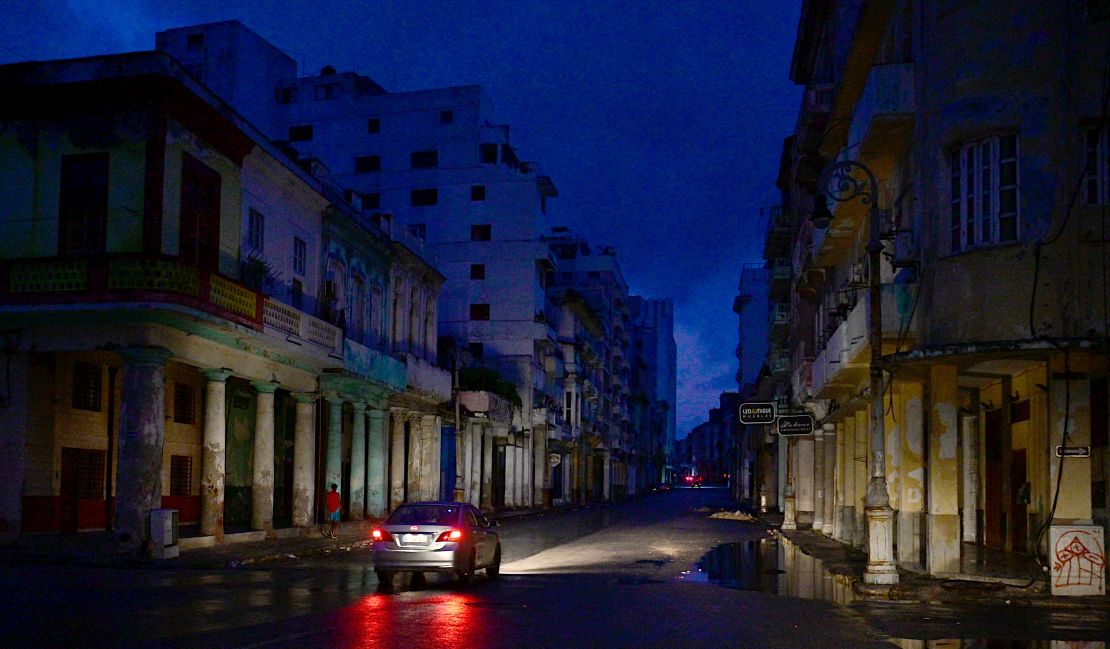
As Cuban Americans, it deeply pains us to witness the suffering of our people on the island, especially when that suffering is continuously weaponized to push a political agenda. The hardships faced by Cubans today are undeniable—from food shortages to power outages—but what is often overlooked is the broader context that has led to these conditions. Too often, the narrative of Cuban suffering is manipulated to justify the continuation of the U.S. embargo, a failed policy that has only served to intensify the very crisis it claims to address.
For decades, the Cuban people have been caught in the crosshairs of political battles that care little for their well-being. Their struggles have become fodder for those who seek to portray the Cuban government as solely responsible for the country’s hardships, while ignoring the devastating impact of the U.S. blockade. It’s a painful reality for those of us who see our family, friends, and fellow Cubans enduring these challenges while being misrepresented by the very forces that claim to be their advocates.
The suffering in Cuba is real, but it is not the result of government indifference. It’s the product of systemic external pressures designed to cripple the country’s ability to thrive. And while the Cuban government is certainly not without fault, the role of the embargo in exacerbating the crisis cannot be ignored. To continue the embargo in the name of “helping” Cubans is a cruel irony—one that keeps an entire nation under siege while offering nothing in the way of real solutions.
With this in mind, we must take a closer look at the myths and distortions that are so often repeated when discussing Cuba’s energy crisis.
Myth 1: “The hotels all have power, but the people don’t.”
This is a false statement. Not all hotels in Cuba have power. Hotels dependent on the national electrical grid experience the same blackouts as the rest of the population. However, some newer hotels, built within the last two decades, have made efforts to be self-sufficient, including installing eco-friendly solar panels and backup power generators. It’s important to note that hotels are part of Cuba’s tourism industry, a key pillar of the national economy.
Tourism is vital for bringing in foreign currency, which funds the import of essential goods such as food and medicine. Even so, when necessary, the government has prioritized the needs of the general population over tourism—such as shutting down power to hotel complexes to ensure energy supply for the public during emergencies. It’s also important to highlight that hotels globally have backup generators as standard practice, not as a sign of preferential treatment.
Myth 2: “People in power have lights.”
This claim exaggerates the reality of energy distribution in Cuba. The government, like all major institutions, faces the same power shortages as the general population. While top officials may have more consistent access to electricity for essential leadership purposes, the idea that the broader group of people involved in governance uniformly enjoy uninterrupted power is not accurate. Cuba’s energy infrastructure struggles under the weight of decades-long restrictions, and blackouts affect people across all sectors.
Myth 3: “People in power can go to any restaurant.”
This claim misrepresents the reality of everyday life in Cuba. Like all Cubans, government officials are subject to the same shortages and economic constraints. Restaurants, particularly in times of crisis, have limited food options and availability. The narrative that officials live in luxury while others suffer ignores the fact that the entire country is grappling with these challenges together.
Myth 4: “There’s plenty of food at hotels while the people starve.”
Food shortages in Cuba affect everyone, including hotels. Visitors to Cuba’s hotels over the past several years can attest to the fact that there is less variety, lower quality, and at times, even lines to access food. The lack of food and other essential resources stems directly from the blockade and the economic hardship it causes, not from a policy of reserving food for tourists at the expense of the general population.
The Cuban government directs resources into the tourism sector because it is vital for generating the foreign currency necessary to fund public services like healthcare, education, and food distribution. While hotels may receive priority for certain goods to maintain economic flow, this is part of a broader strategy to ensure the survival of the nation, not a sign of neglect toward ordinary citizens.
Myth 5: “Private stores are full, but government-run stores are empty.”
This is a result of the economic pressures exacerbated by the U.S. blockade. Private stores, known as “tiendas particulares,” often rely on external networks and can source goods through remittances and other means not available to government-run stores. These private businesses fill a gap in the market, but often at prices too high for most Cubans to afford. Government-run stores, which provide subsidized goods to the population, struggle to stock items due to the blockade’s restrictions on imports and international trade. The contrast between private and public stores reflects the broader economic divide created by these external pressures.
Myth 6: “The government always has food while the people starve.”
This claim oversimplifies the situation. The Cuban government faces the same food shortages as the general population. The idea that government officials are hoarding food while the public suffers is inaccurate. Food scarcity in Cuba is driven largely by the U.S. embargo, which restricts access to agricultural products, imports, and trade opportunities.
Myth 7: “The power plant issue is a failure of the regime.”
Cuba’s energy infrastructure, including its aging power plants, has long struggled under the weight of the U.S. embargo. The construction of new power plants and modernization efforts have been hindered by a lack of access to necessary technology, spare parts, and financing. The challenges Cuba faces with its energy system are not solely the result of internal failings but are deeply linked to external constraints that limit the country’s capacity for large-scale improvements.
Myth 8: “The government is doing nothing to help or fix the problem.”
This claim ignores the reality of Cuba’s efforts to manage the crisis. The government has implemented various measures to address the energy crisis, including investments in renewable energy and power rationing strategies to mitigate the impact on the population. However, the blockade continues to limit access to the resources and technology necessary for more significant infrastructure improvements. The government is actively working to fix the problem within the limitations imposed by external pressures.
Myth 9: “Cuba doesn’t ask for or accept help.”
This is one of the more persistent misconceptions. Cuba has repeatedly asked for and accepted international assistance, including from the Biden administration. The Cuban government has made a consistent and vocal plea to lift the U.S. embargo, which is the most significant form of help that could be provided to the island. Far from refusing aid, Cuba has sought solutions that would allow the country to fully recover and rebuild.
 Cuban-Americans for Cuba